
Practical French Expressions
Meaning, pronunciation, register, and speaking drills for the short French expressions learners hear everywhere but rarely get to practise in context.
- 1
 1Part 1Aug 1411 min read
De Rien Meaning: Pronunciation and Better Alternatives
Learn what de rien means in French, how to pronounce it naturally, and when to choose je vous en prie, avec plaisir, or pas de quoi.
Start here - 2
 2Part 2Aug 1411 min read
Voilà Meaning: Pronunciation, Uses, and Examples in French
Learn what voilà means in French, how to pronounce it, when it differs from voici, and how to use it in natural sentences with short speaking drills today.
Read article - 3
 3Part 3Aug 1412 min read
Friend in French: Ami, Copain, or Pote?
Learn how to say friend in French with ami, copain, pote, and petit ami. Choose the natural word for friends, classmates, partners, and peers.
Read article - 4
 4Part 4Aug 1412 min read
Yes in French: Oui, Si, and Ouais Explained
Learn how to say yes in French with oui, si, and ouais. Understand negative questions, natural pronunciation, register, and everyday examples.
Read article - 5
 5Part 5Aug 1411 min read
Goodbye in French: Au Revoir, Salut, and More
Learn how to say goodbye in French with au revoir, salut, bonne journée, à bientôt, and adieu. Choose the right farewell for every situation.
Read article - 6
 6Part 6Aug 1412 min read
Touche Meaning in French: Pronunciation and Real Usage
Learn what touche means in French, how to pronounce it, and when to use it in fencing, conversation, art, and everyday speech.
Read article - 7
 7Part 7Aug 1412 min read
C'est la Vie Meaning: Pronunciation and Real French Usage
Learn what c'est la vie means in French, when it sounds natural, how to pronounce it, and what to say when resignation is not the right tone.
Read article - 8
 8Part 8Aug 1411 min read
Welcome in French: Bienvenue and You're Welcome
Learn how to say welcome in French, why bienvenue does not usually mean you're welcome, and the natural replies to merci.
Read article - 9
 9Part 9Aug 1411 min read
I Love You in French: Aimer, Adorer, and Real Usage
Learn how to say I love you in French, when j'aime differs from j'adore, and the phrases that fit partners, friends, family, and favourite things.
Read article - 10
 10Part 10Aug 1411 min read
Mademoiselle Meaning: Modern French Usage Explained
Learn what mademoiselle means in French, why madame is usually safer today, how to pronounce both, and when mademoiselle still appears in real conversations.
Read article - 11
 11Part 11Aug 1411 min read
Good Morning in French: Bonjour, Timing, and Pronunciation
Learn how to say good morning in French with bonjour, when it works, what to say instead, and a short pronunciation drill for real conversations.
Read article - 12
 12Part 12Aug 1412 min read
Cheers in French: Toast Phrases, Etiquette, and Pronunciation
Learn how to say cheers in French with santé, à la vôtre, tchin-tchin, toast phrases, social etiquette, and a short speaking drill.
Read article - 13
 13Part 13Aug 1411 min read
Good Night in French: Bonne Nuit vs Bonsoir
Learn how to say good night in French, when to use bonne nuit or bonsoir, polite alternatives, pronunciation, and a short speaking drill.
Read article - 14
 14Part 14Aug 1411 min read
Bon Appétit Meaning: When to Say It and How to Pronounce It
Learn the bon appétit meaning, when French speakers say it, how it differs from bonne dégustation, pronunciation, and a short speaking drill.
Read article - 15
 15Part 15Aug 1411 min read
Please in French: S'il Vous Plaît, S'il Te Plaît, and Pronunciation
Learn how to say please in French with s'il vous plaît and s'il te plaît, when to use each form, pronunciation, and a short speaking drill.
Read article - 16
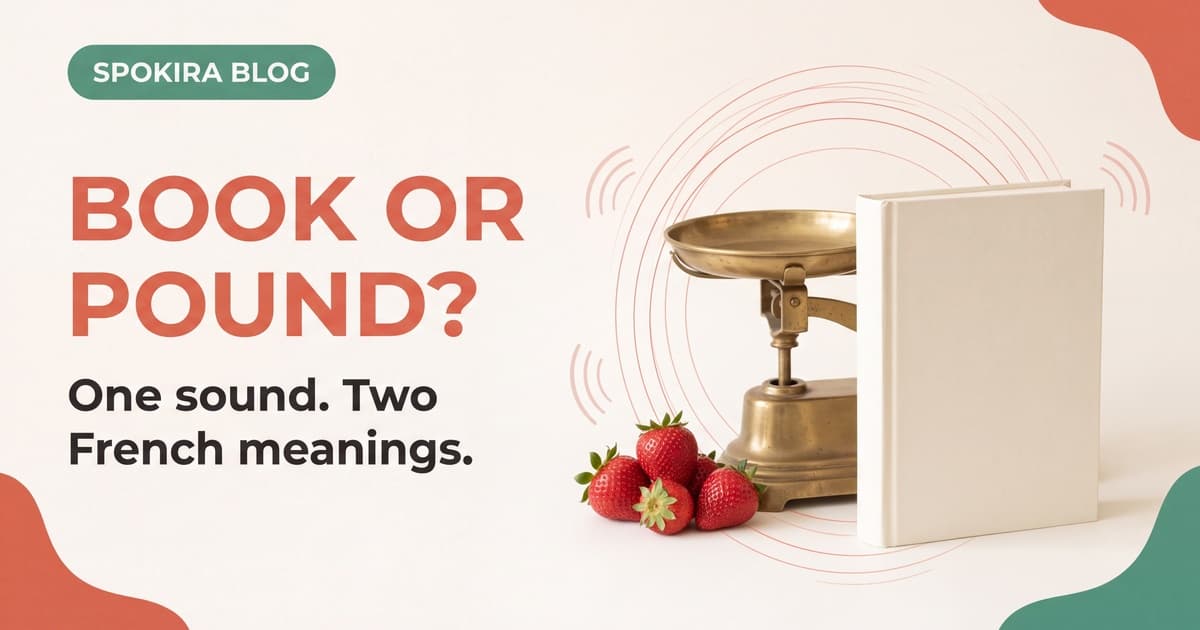 16Part 16Aug 1714 min read
Livre Meaning and Pronunciation: Book or Pound?
Learn why un livre means book and une livre means pound, how both sound /livʁ/, with plural forms, useful phrases, common mistakes, and a short speaking drill.
Read article - 17
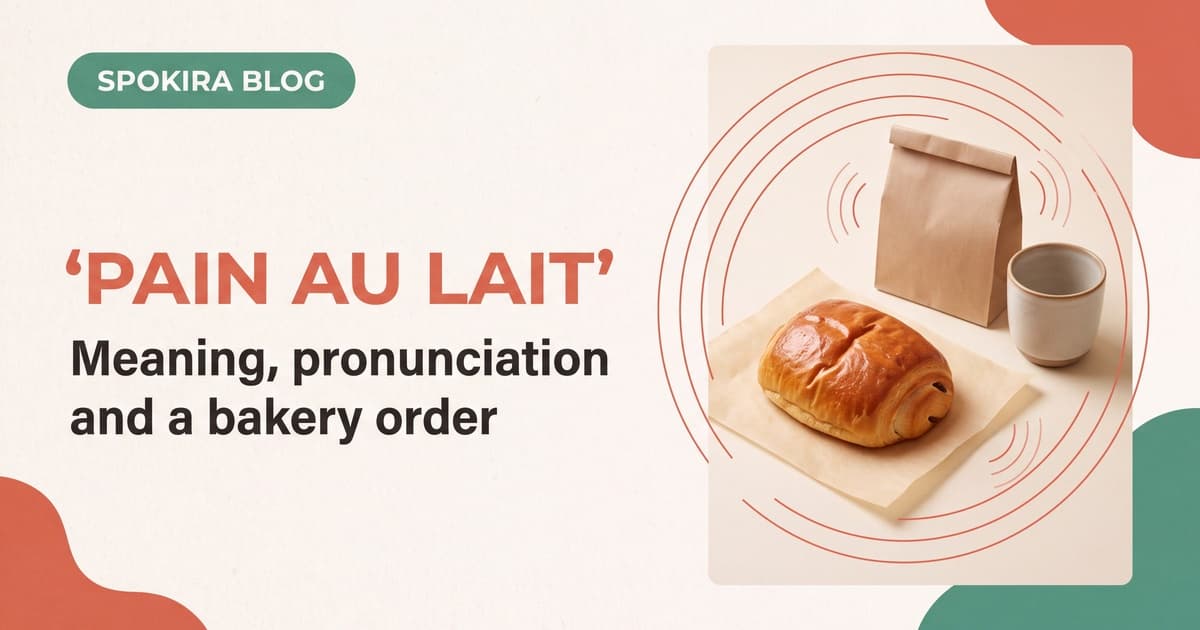 17Part 17Aug 1712 min read
Pain au Lait: Meaning and Pronunciation
Learn the pain au lait meaning, pronounce /pɛ̃ o lɛ/ without adding an N, order this French milk bun politely at a bakery, and practise a short speaking drill.
Read article