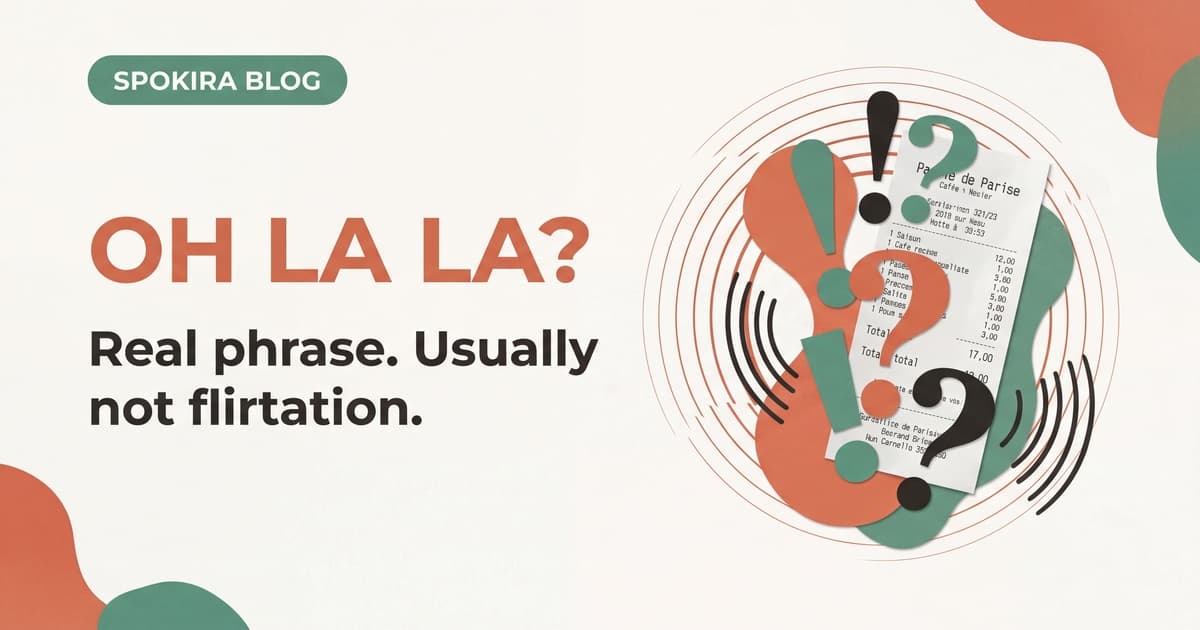
This might be the most caricatured French phrase in English. It brings to mind berets, baguettes, and theatrical gasping. Surely no real French person actually walks around saying oh là là?
They do. A lot, actually.
Yes, It's Real
Unlike comme ci, comme ça (which mostly survives in textbooks), oh là là is alive and well. French people say it without thinking. It sits in the same everyday bucket as "oh wow," "oh no," or "for god's sake," depending on the moment.
The difference is in what it means and how it sounds.
What English Speakers Think It Means
In English, "oh la la" has been co-opted to mean something flirtatious or risqué. Lingerie brands use it. Movie characters say it with a wink. The implication is always vaguely romantic or scandalized.
That reading is mostly wrong.
What It Actually Means
In French, oh là là is a general-purpose exclamation that expresses:
| Emotion | Example situation | How it sounds |
|---|---|---|
| Annoyance | You spill coffee on your shirt | Oh là là... (flat, sighing) |
| Sympathy | Friend tells you about a bad day | Oh là là, c'est pas cool |
| Surprise | Unexpected news | Oh là là! (rising pitch) |
| Overwhelm | Too much to deal with | Oh là là là là... (drawn out) |
| Admiration | Beautiful view, great meal | Oh là là, c'est beau |
Notice what's missing: anything flirtatious. If you use oh là là in a suggestive, movie-French way, a French speaker will probably just wonder what bit you're doing. For them, it's much closer to "oh no" or "oh wow" than "oh baby."
Key Insight
The more "là"s you add, the more intense the reaction. Oh là là = mild. Oh là là là là là = something has gone very wrong (or very right).
How to Pronounce It
The English version, "oh-LAH-LAH" with heavy stress on each syllable, sounds performative to French ears.
The real pronunciation is faster and flatter:
- Oh là là → oh lah lah, quick, almost tossed off
- The "oh" is short, not drawn out
- The "là"s are light, not emphasized
- The whole thing takes about one second
When it's expressing annoyance or resignation, the pitch drops. When it's surprise, the pitch rises. The phrase is more about intonation than careful pronunciation.
Variations You'll Hear
French speakers remix this phrase constantly:
| Variation | When used |
|---|---|
| Oh là là | Standard: mild surprise or concern |
| Oh là là là là | Escalated: something serious or impressive |
| Ouh là | Quick version: casual surprise |
| Ouh là là | Common blend |
| La vache | "The cow", similar energy, slightly stronger |
| Oh la la, c'est pas vrai | "Oh no, that can't be true", disbelief |
La vache deserves special mention. It literally means "the cow" and functions exactly like oh là là but with slightly more punch. You'll hear it when someone is genuinely shocked.
In Real Conversation
Here's what it sounds like in context:
Seeing the restaurant bill:
"Oh là là, c'est cher!" (Oh wow, that's expensive!)
Hearing about a friend's breakup:
"Oh là là... T'as besoin de parler?" (Oh no... Do you need to talk?)
Watching someone nearly trip:
"Ouh là! Fais gaffe!" (Whoa! Watch out!)
Tasting incredible food:
"Oh là là, c'est trop bon." (Oh man, this is so good.)
None of these are flirtatious. All of them are completely natural.
Try It Yourself
Practice these with real intonation. The tone matters more than the words:
- "Oh là là, j'suis en retard !" (Oh no, I'm late!) Stressed, hurried.
- "Oh là là, c'est beau." (Wow, it's beautiful.) Soft, admiring.
- "Oh là là là là..." (drawn out) Overwhelmed, shaking your head.
- "Ouh là, doucement !" (Whoa, easy!) Quick, cautionary.
Shadow each one and pay attention to where your pitch goes. That's the real skill here. Not the words by themselves, but the shape of the reaction.
For practice with native-speed French intonation like this, Spokira's shadowing exercises let you match your rhythm and pitch to real French speakers.