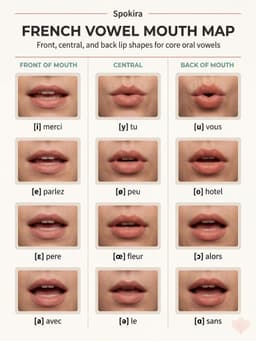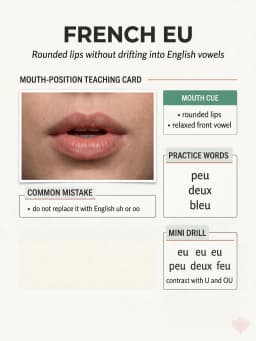
French R Throat Pronunciation Guide
A fast guide to the French R: throat position, common mistake, and practice words.
Share this visual
Share the page URL so the visual earns links, saves, and citations.
Embed snippet links back to the canonical visual page.
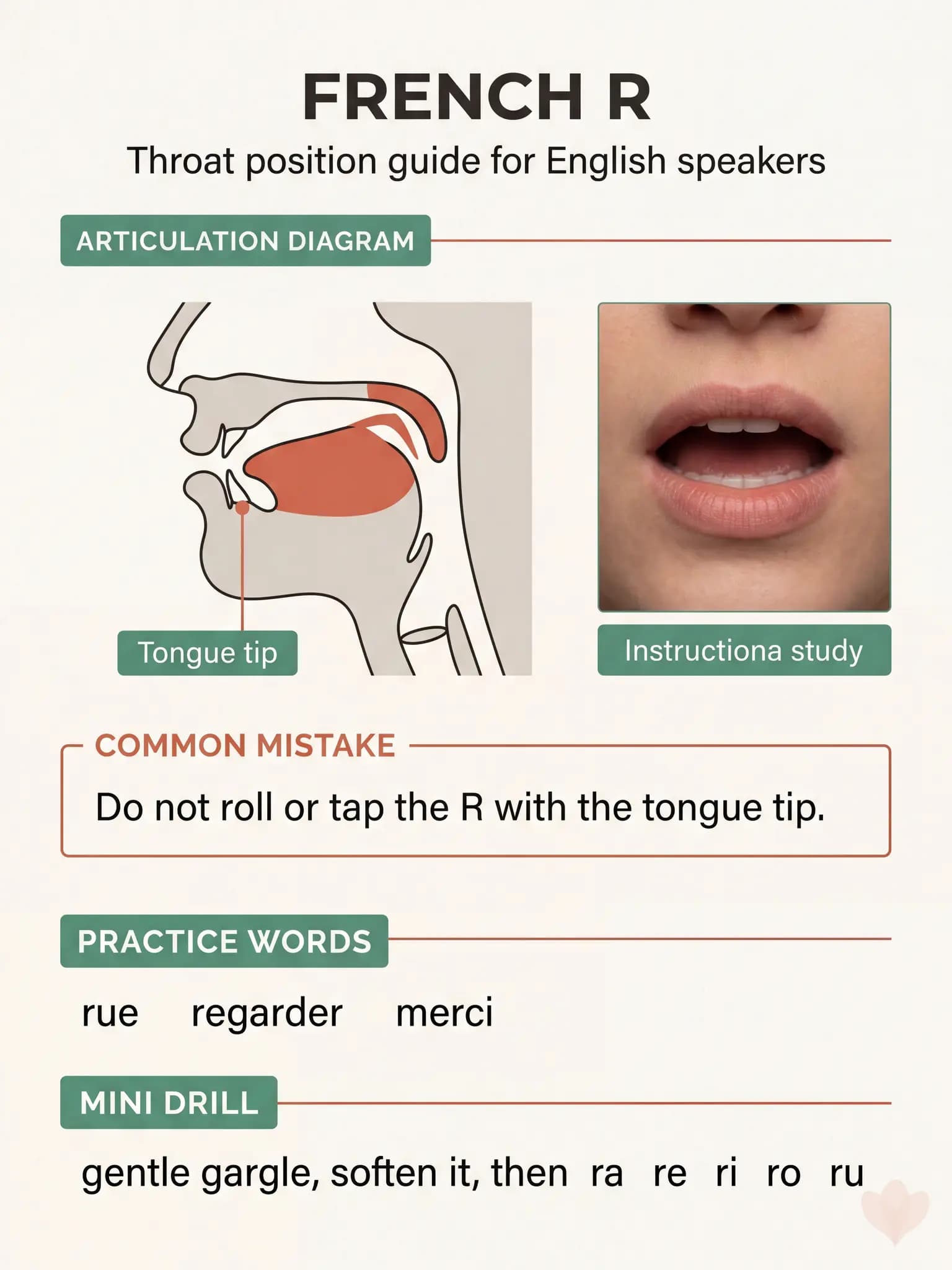
The French r usually breaks down when learners try to force an English habit onto it. You do not need a rolled Spanish-style r, and you do not need the tongue tip doing the work. The sound is rougher and farther back.
What the French R is doing
- Tongue tip low
- Back of tongue lifts toward the soft palate
- Air friction happens in the throat, not at the tongue tip
What usually goes wrong
Most English speakers either tap the r, roll it, or make it too clean. A slightly rough, back-of-the-mouth friction is closer to the target.
Practice words
- rue
- regarder
- merci
Quick practice
- Start with a gentle gargle.
- Soften the friction.
- Add vowels: ra re ri ro ru.
Why this works
Modern standard French usually realizes r as a uvular sound rather than an English-style alveolar one. French phonology on Wikipedia notes that [ʁ] is the most common default realization, with a voiceless variant near voiceless consonants, which is why the "gentle gargle, then soften it" cue gets learners closer than rolling the tongue tip.
Where to go next
Pair this with the broader French pronunciation mouth position guide if you want the rest of the hard sounds on one page. For a fuller training routine, see French R sound practice daily drill.
Practice Inside Spokira
Use Spokira to compare your R against the native model.